Do you want to start the class by reflecting on what COVID shows us about bioethics? Indiana University identifies some of the ethics of coronavirus at this link. Do you agree with the points they make? NCBI has a long analysis of the relevant ethics principles here. How do you analyze their treatment of the questions? What ethical issues have you confronted based on COVID?
Much research now suggests that Patient Decision Aids (PDAs) provide a great deal of assistance to improving informed consent. They empower patients to make better decisions. What would you think of using a PDA? Read about what they are at PDA. Then see PDAs available for a long list of diseases at Disease List.
C. Looking Ahead: Improving Consent In New Circumstances
+ View Resources
1. CAN TECHNOLOGY IMPROVE INFORMED CONSENT?
Watch the following videos on informed consent:
Do electronic consent forms help or hinder informed consent? Could they improve patients' understanding of what they are facing? Would you rather have non-electronic or electronic informed consent? Why? See Mark Robinson's discussion of the ethics of electronic consent at What are the Ethics of Electronic Consent Forms?.
2. APOMEDIATED CLINICAL TRIALS
Compare www.patientslikeme.com (makes money by selling patient information to companies that are developing products) with http://diygenomics.net (brings tools and libraries together for small scale genomics labs for the process of sequence assembly), and https://www.inspire.com (receives funding by providing research for life science companies).
Pro-life states Louisiana, Arkansas, and Alabama are suing New York, California, and Massachusetts for their shield laws, which protect them from out-of-state lawsuits against women connected to abortion. They argue the states are undermining Dobbs. States have used their shield laws to send abortion pills into Louisiana, Arkansas, and Alabama. They say Louisiana has 1,000, Arkansas has 300, and Alabama has 700 abortions a month because the shield states are sending in abortion pills. They say telehealth allows out-of-state doctors to offer abortion care in the pro-life states. They say the shield states violate the Full Faith and Credit Clause, equal sovereignty, federal common law of public nuisance, and the Dormant Commerce Clause. They also want to restore Dobbs, because Dobbs says abortion is a state choice and the shield states are trying to make abortion rights the law of the whole country. The states' complaint is available at Complaint.
What do you think the result of this lawsuit will be? Are there legal ways for Louisiana, Arkansas, and Alabama to restrict abortion in New York, California, and Massachusetts?
C. Looking Ahead: More Markets for More Body Parts
+ View Resources
1. The Dead Donor Rule
What do you think of the morality of Imminent Death Donation, which involves living donors near the end of their lives, and "advocates for non-vital organ donation from the living donor prior to withdrawal of all life-sustaining treatment." Should it make a difference if the living donor is capable or incapable of making the decision to donate? Is this a good way to increase organ donations? Jordan Potter addresses the ethical issues connected with IDD at Imminent Death Donation: Ethical and Practical Policy Considerations.
2. Ovaries and Uteruses
3. Reverse Transplant Tourism
4. Mind Over Matter: Organ Donation by the Mentally Incompetent
5. Organ Donation in U.S. Prisons
Chapter 5. Conscience: An Exercise of Paternalism or Autonomy?
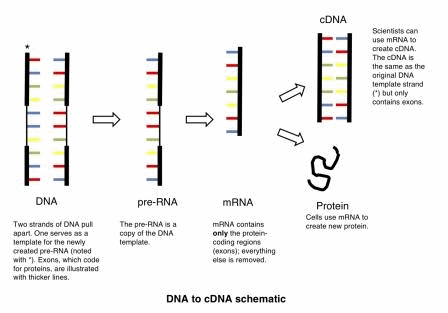
Scientists study genes in order to determine how diseases are caused. By means of DNA sequencing, Myriad identified two genes, BRCA1 and BRCA2, that cause breast and ovarian cancer. To visualize what the genes look like, go here.
Moderna and Pfizer are arguing about the patents associated with their COVID-19 vaccines. Moderna alleged three of its patents were violated by Pfizer. How could this difference of opinion about the patents be resolved? For background to this dispute, see TextExplainingCOVIDPatentDispute.
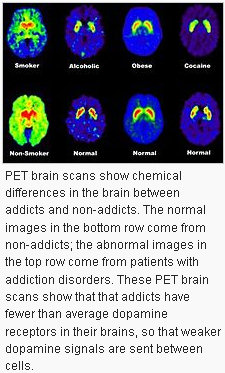
A group of prominent neuroethicists conclude that brain imaging tests can be used to measure people's pain more accurately. Yet it is not yet time to use the evidence to prove or contest pain in court. Do you agree? See Brain Imaging Tests For Chronic Pain.
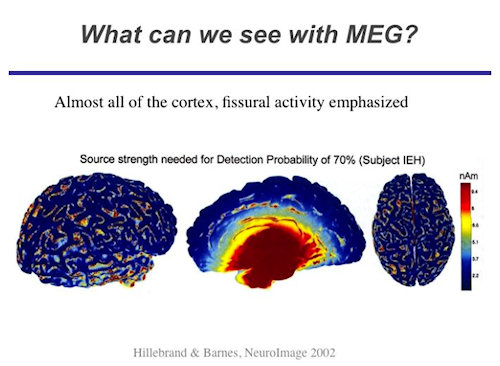
Nita Farahany, Henry Greely and 15 others provided an interesting analysis of the latest brain research.They explore the ethical limits of using human brain tissue in research. They identify three classes of brain surrogates that raise hard questions. First are organoids, 3D structures that can be built from stem cells. Second is ex vivo brain tissue, in which cells are taken from humans during medical treatment. Third are chimaeras, in which human cells are transferred into animal brains. What limits would you place on such technology? Read their text here.
The New York Times reported on a new technique to improve the health of people who have suffered brain damage. Their patient suffered her injury 18 years ago, and post-injury had a much harder time reading, concentrating, and working, and also suffered from fatigue. The surgeon threaded two electrodes into her thalamus. It was critical for the doctors to place them precisely. The electrodes were attached to a device in the patient's chest that provided active current for 12 hours a day. The woman then scored better on tests and was much less fatigued. What do you think about such a procedure for the millions of people who have suffered brain injury? See Benedict Carey's article at Brain Damaged Woman. Carey then wrote a story about different electronic treatments for the brain. He mentioned this woman's story; E.C.T. (electroconvulsive therapy), an older system that sends seizure through the brain to decrease depression; D.B.S. (deep brain stimulation), an electrode that affects a specific region of the brain; or coupling different regions of the brain to work together. Neural. Are you optimistic or pessimistic about these discoveries?
Is it feminist or sexist to identify differences between male and female brains? Is it feminist to recognize that women's brains are different from men's brains, which is recognized now that researchers pay more attention to women's presence in health care? Or will women be harmed in a sexist manner if scientists find their brains are different from men's brains? You can read about that debate at Male and Female and Neurosexism.
6. Ethical Issues for Physicians in Punishment
6. What is the Practice of Medicine?
Read Dr. Fins' reflections on the death of Terry Wallis and the treatment of brain-injured patients. Do you agree with him? What should the future treatment of brain-injured patients look like? See Fins.





 Teacher Resources